
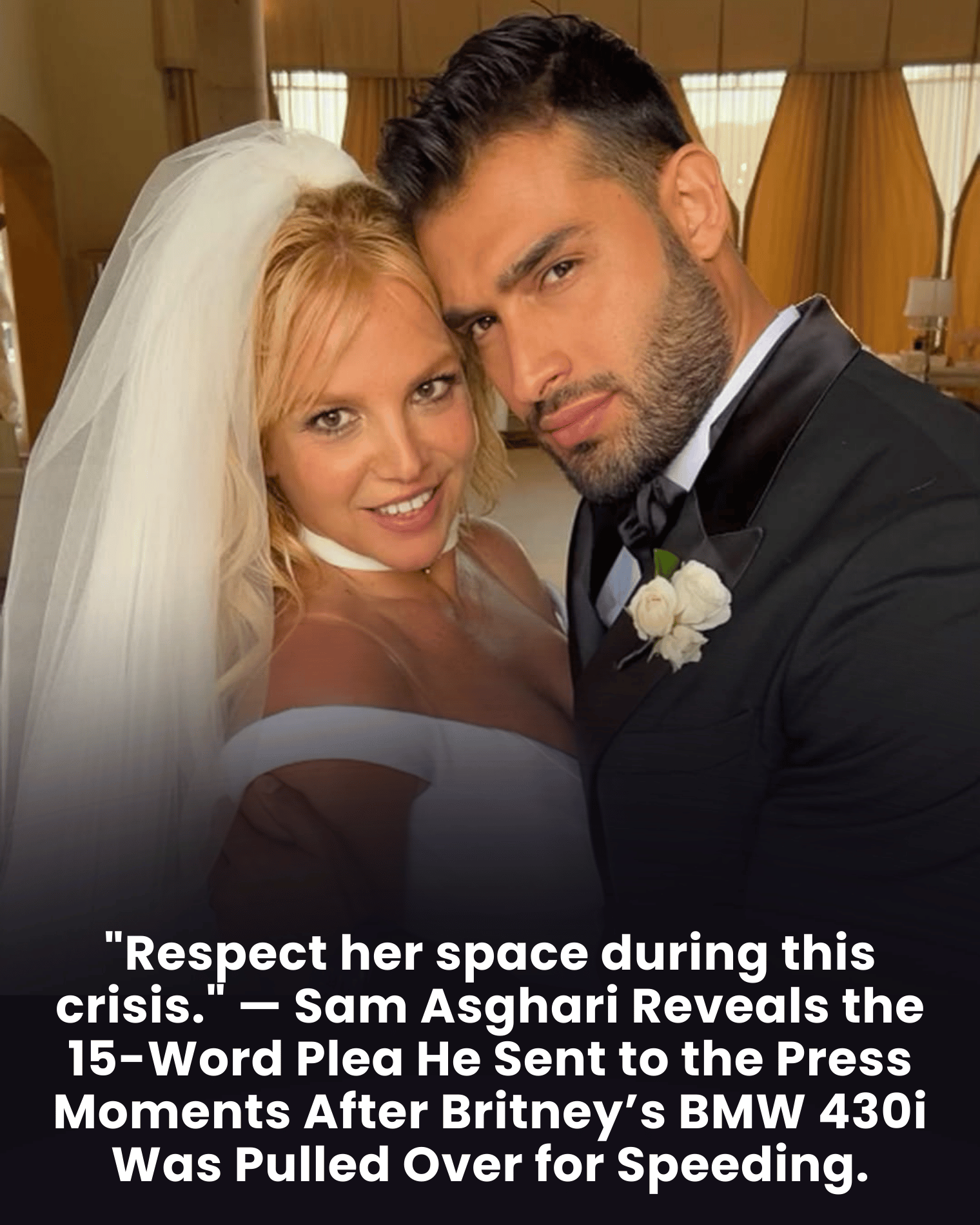
When headlines erupted over a late-night traffic stop involving Britney Spears' black BMW 430i in Ventura, the reaction was swift and merciless. Within minutes, social media feeds filled with flashing lights, speculative commentary, and recycled narratives about the pop icon's past struggles. Yet amid the digital storm, one voice cut through the noise with a markedly different tone. It wasn't a publicist or legal representative, but her former husband, Sam Asghari, who stepped forward with an unexpected plea.
Asghari, 32, was reportedly in the middle of a fitness promotion appearance when his phone began lighting up with alerts. News had broken that Spears' vehicle had been pulled over for speeding, with reports describing erratic driving along Ventura roads. For many public figures, such a moment might prompt silence or a carefully worded statement days later. Instead, Asghari acted almost immediately. He reached out to members of the press with a direct 15-word request: respect her space during this crisis and remember her humanity.
The gesture carried weight precisely because of their history. Asghari and Britney Spears finalized their divorce in 2024 after a highly scrutinized marriage. At the time, he publicly stated that he wished her "nothing but the best" and asked fans to approach the separation with compassion rather than speculation. Critics dismissed the remarks as routine celebrity diplomacy. But his response to the recent traffic stop suggests something deeper — a consistent refusal to exploit turmoil for attention.
During a March 6 interview with Fox News, Asghari elaborated on his perspective. He reminded viewers that behind the Grammy-winning performer known for global hits like "Toxic" is a woman navigating immense pressure. "She's a human being who makes mistakes," he said calmly, pushing back against the tendency to turn every misstep into a spectacle. The comment resonated not because it defended reckless behavior, but because it reframed the narrative away from sensationalism and toward empathy.
The entertainment industry has long grappled with how it treats its most visible stars during vulnerable moments. For Spears, whose life has unfolded under relentless public scrutiny since her teenage years, even minor incidents can snowball into international headlines. The image of flashing police lights reflected against a sleek luxury car becomes symbolic, feeding long-standing storylines about instability or crisis. Asghari's intervention attempted to interrupt that cycle, urging media outlets to consider the cumulative toll of constant exposure.
Observers noted the contrast between the frenzy outside and the restraint in his words. Rather than assigning blame or offering inside details, he called for what he described as a "privacy shield." It was a phrase that implied protection rather than control — a barrier against invasive speculation. Coming nearly two years after their divorce, the appeal underscored that care does not always vanish with the end of a marriage.
Public reaction has been mixed. Some fans praised Asghari for modeling maturity and respect, while others questioned whether any public comment inevitably fuels further coverage. Yet even critics acknowledged the unusual nature of an ex-spouse advocating for restraint instead of relevance. In a culture where personal drama often becomes currency, choosing discretion can be a radical act.
The incident itself may fade from headlines within days. Traffic stops happen every night across America, rarely warranting national debate. But the broader conversation about dignity in moments of crisis lingers. Asghari's plea serves as a reminder that celebrity does not erase vulnerability. Behind the paparazzi lenses and push notifications stands a person still navigating ordinary human imperfections — something he seemed determined not to let the world forget.